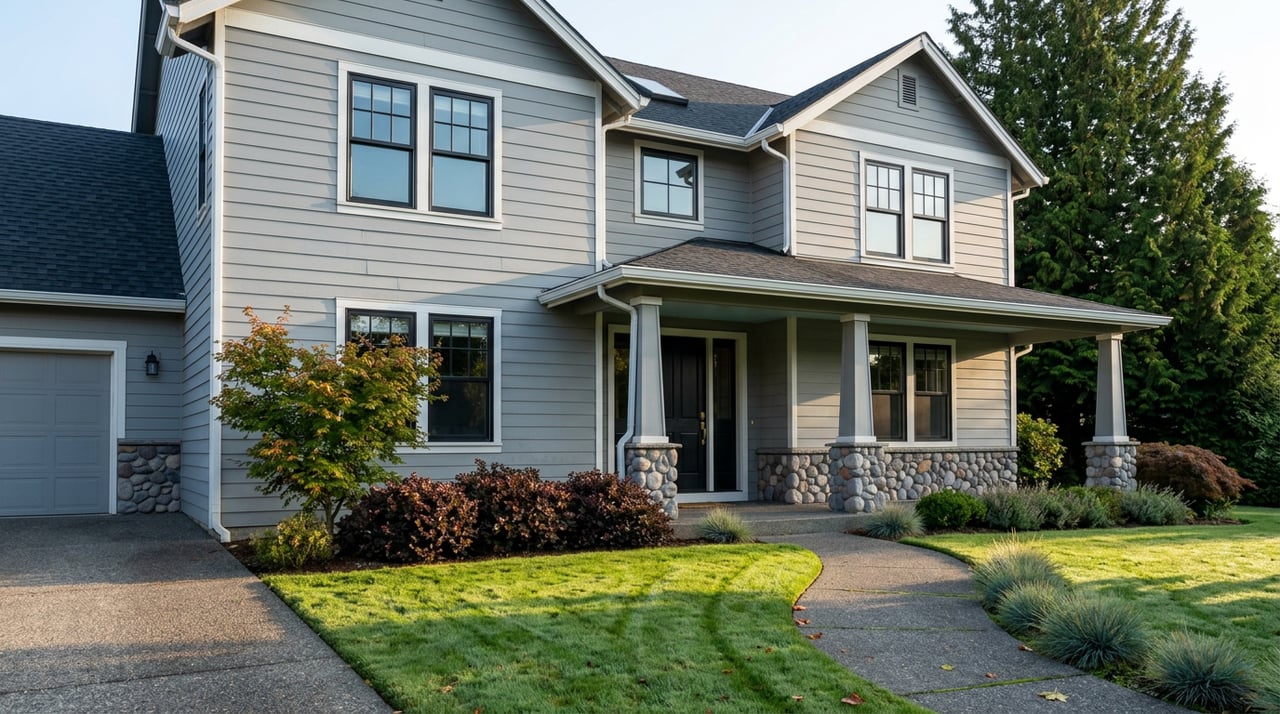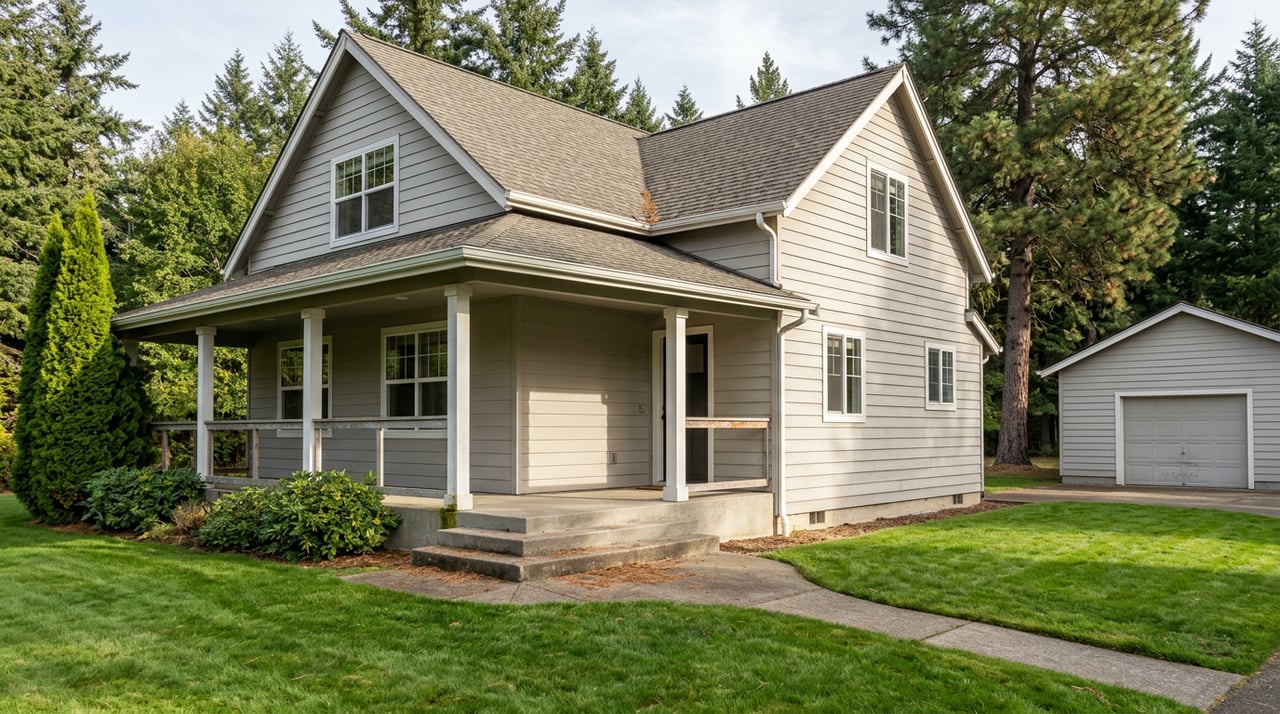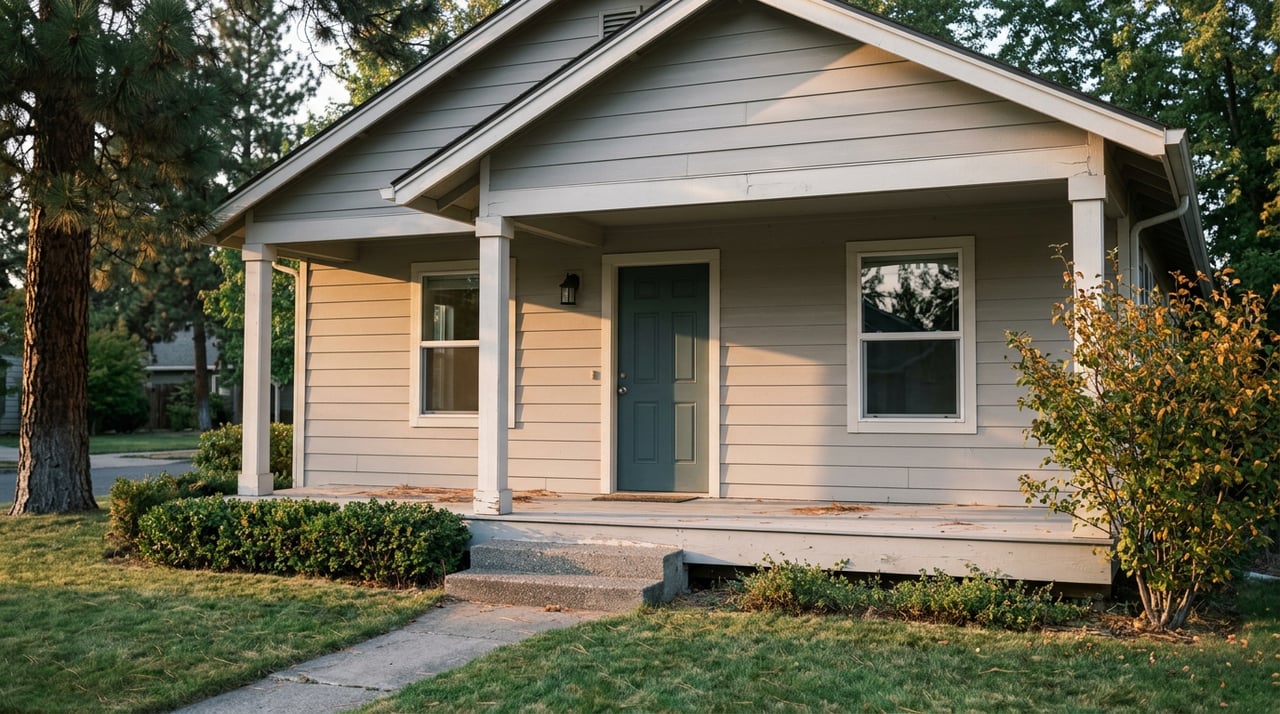
Say you're touring a three-bedroom bungalow near Sanders Beach, the kind of property that shows up on every investor's shortlist because it already has a rental history and a listing on Airbnb. Your first instinct, the one every guide on the internet tells you to follow, is to ask whether it has a valid short-term rental permit. That question used to be the whole ballgame in Coeur d'Alene. As of July 1, 2026, it isn't anymore, and the property's actual value now hinges on something almost nobody is asking about yet.
Idaho House Bill 583 took effect that day. Signed by Governor Brad Little and sponsored by Rep. Jordan Redman of Coeur d'Alene, it rewrote the two state code sections that govern how cities and counties can regulate short-term rentals. The law does not just limit local authority. It says a county or city may not require a license, fee, permit, certification, or registration to operate a short-term rental at all, outside of a short list of safety items. That single sentence dismantles most of the permitting structure Coeur d'Alene built over the last nine years, and the city's own public-facing pages have not caught up.
What the Law Actually Allows a City to Enforce Now
Redman has said the intent was to stop "undue regulation and burdens" on property owners. Sen. Todd Lakey pointed to the Idaho Supreme Court's May 2025 decision striking down a Lava Hot Springs ordinance that functioned as an outright STR ban as evidence that cities had gone too far. HB 583 responded by narrowing what a city or county can put in its code to five specific items: working smoke alarms in every sleeping area, a fire extinguisher and carbon monoxide detector on each floor, removable escape ladders in upstairs bedrooms with a window, occupancy limits no stricter than the international building code allows for any residential use, and a posted handout listing exits, first aid kits, and an emergency contact.
That's it. No permit. No license fee. No annual renewal. No cap on how many units one owner can run.
The Checklist Coeur d'Alene Buyers Have Used for Years
Before July, anyone evaluating an STR-suitable property in Coeur d'Alene was really evaluating the permit that came with it, because the city's 2017 ordinance built a whole framework around scarcity and control:
- One unit per owner per parcel could be permitted as an STR, specifically to keep multifamily buildings from turning into unlicensed hotels.
- An accessory dwelling unit could only operate as a short-term rental if the primary home or the ADU was occupied by a majority owner (or immediate family) for more than six months a year, and the two units could never both run as STRs at the same time.
- Permits were issued to the owner, not the property. The city's own FAQ explained the reasoning directly: making permits transferable would hand a windfall to whoever happened to hold one, so a sale meant the buyer started from zero and reapplied.
- Renewal ran on a hard annual clock, due by March 1 and expiring March 31 if missed.
That structure is exactly why permitted inventory stayed tight. As of early 2023, the city estimated somewhere between 840 and 1,200 advertised short-term rentals operating inside city limits, against roughly 450 that actually held a permit. The gap was large enough that the council paid $38,000 to Granicus, a compliance vendor based in St. Paul, Minnesota, to run a 24/7 complaint hotline and hunt down unlicensed listings, and a planning commission vote in 2023 recommended raising fines for unpermitted operation from $100 to $1,000 and bumping the annual renewal fee by $84 to $180. The city fought hard to keep that system, and Mayor Dan Gookin said as much when HB 583 was working through the legislature:
"It's my hope that our legislature values local control and appreciates the efforts made by city staff to provide fair and balanced rules regarding STRs within our community. We do so on behalf of families who invest in a neighborhood as well as those on limited income who rely upon STR revenue to help pay the bills."
Kevin Jester, who sits on both the Ignite CDA board and the city's Design Review Commission, put the concern in plainer terms, arguing the bill strips away the tools the city used to protect residential character and that it bars any license, fee, permit, certification, or registration requirement outright. He wasn't wrong about what the statute says. He was describing, in real time, the exact mechanism that makes the old checklist obsolete.
Why the City's Own Page Still Describes the Old Rules
Here's the part that actually matters if you're writing an offer this fall. The city's vacation rental information page, the one planning staff point buyers and hosts to, still walks through the one-unit-per-parcel limit, the annual permit process, and the ADU occupancy requirement as if they are the operative rules today. That isn't an oversight so much as a function of how state preemption actually lands on a city. Idaho law requires an ordinance to be read three times before a council can formally adopt a change, the same procedural requirement that slowed neighboring Sandpoint's repeal of its own STR ordinance well into the summer even after the council agreed the state had already overridden it. Coeur d'Alene faces the identical mechanics. A state law can take effect on July 1 and be binding immediately, while the local code that contradicts it sits on the books for months because the legislative process to formally remove it hasn't finished.
City staff have not hidden their frustration with how fast this is moving. At an April workshop covering HB 583 alongside three other new housing bills, Planning Director Hillary Patterson told council and commission members, "Things will be changing," and members of the room described the bills as "dumb" and "not very clever" before getting back to work on how to implement them anyway.
The ADU Wrinkle That Shows How Messy This Gets
A second law, Senate Bill 1354, took effect the same day and raises the statewide minimum size for a detached accessory dwelling unit to 1,000 square feet, up from Coeur d'Alene's old 800 square foot cap, and it removes the owner-occupancy requirement for renting an ADU long-term. That part is straightforward. Where it gets genuinely confusing is the overlap with HB 583: guidance published in late July still described Coeur d'Alene's short-term rental ordinance as requiring a majority owner to occupy one of the two units before an ADU could be rented on a nightly basis, even though HB 583's plain text bars exactly that kind of owner-occupancy mandate for STRs. Two state laws, aimed at different problems, collided at the one use case, ADU-as-nightly-rental, that both of them touch, and neither the statute language nor the city's guidance has fully sorted out which rule wins.
| What a city or county can still require | What HB 583 removed |
|---|---|
| Smoke alarms in all sleeping areas | STR-specific license, permit, or registration |
| Fire extinguisher and CO detector per floor | One-unit-per-parcel caps |
| Removable escape ladders where required | Owner-occupancy mandates for STRs |
| Occupancy limits under the IBC | Rental-day caps and density restrictions |
| Posted emergency information | Extra insurance or inspection requirements beyond safety |
What Changed and What Didn't
Lodging taxes are unaffected by any of this. Stays of 30 days or less still carry Idaho's 6 percent sales tax and 2 percent Travel and Convention Tax, plus any applicable local-option tax, and platforms like Airbnb and VRBO still collect and remit on the bookings they facilitate. When Sandpoint's council worried aloud about losing that revenue, Mayor Jeremy Grimm pointed out the city still gets its share from the state tax commission after the platforms report. Coeur d'Alene is in the same position. The regulatory authority moved. The tax pipeline didn't.
What to Verify Before You Write an Offer
If a short-term rental strategy is part of the plan, treat the permit question as the wrong first question and start here instead:
- Ask the planning department directly what they are currently enforcing on the ground, not what the ordinance page says, since the two may not match right now.
- If the plan involves an ADU, get written confirmation on whether owner-occupancy is being required for short-term use, because published guidance and the statute disagree.
- Budget for the five safety items the state still allows, smoke alarms, extinguishers, CO detectors, escape ladders where applicable, and a posted emergency handout, since these are the compliance costs that survive regardless of how the permit question resolves.
- Confirm current lodging tax registration status for the specific address, since that obligation hasn't moved even though the permitting framework has.
- Watch for the council's eventual rewrite of the ordinance rather than assuming today's rules are the last word, since the three-reading process means more changes are still coming.
Frequently Asked Questions
Does a Coeur d'Alene STR still need to renew a permit by March 1? The city's published process still describes an annual renewal deadline, but HB 583's plain text bars a permit requirement altogether. Confirm current practice with planning staff rather than relying on the posted deadline alone.
Can a property still be fined for operating without a permit? The old ordinance set penalties as high as $1,000 for unpermitted operation, but that enforcement tool depends on the permit requirement surviving state preemption. Ask the city directly what, if anything, is currently being enforced.
Does this change anything for STR properties in unincorporated Kootenai County? HB 583 applies statewide to both cities and counties, so the same narrow safety-only framework governs county land as well. County-specific practice may still be catching up on its own timeline.
Do HOA rules still apply even though city permitting changed? Yes. Nothing in HB 583 touches private covenants. An HOA can still prohibit or restrict short-term rentals in its CC&Rs regardless of what the state or city allows.
The rules around this are moving faster than most buyers expect, and the gap between the statute and the paperwork is exactly where a good local read pays off. If you're weighing a short-term rental purchase in Coeur d'Alene, Natalie Priebe can help you separate what the city page says from what's actually enforceable today, and build a plan around the version of the rules that will still be true next spring. Reach out for a personalized market consultation before you write an offer.