Buyers comparing Post Falls and Coeur d'Alene tend to carry the same assumption into both cities: the cheaper one will also be the easier one to talk down. A lower median price reads as slack in the system, room for a seller to come off their number if the house sits for a few weeks or the inspection turns up a few thousand dollars in repairs.
The market doesn't work that way right now. Over the three months ending May 2026, Post Falls homes sold at a median of $525,000 and moved off the market in about 14 days, with buyers averaging two competing offers per listing, a pace fast enough that Redfin classifies it as a very competitive market. Coeur d'Alene, over the three months ending August 2026, carried a higher median of $599,000 but took nearly twice as long to sell, around 26 days, with roughly one offer per home and a market Redfin rates as only somewhat competitive. Earlier in the year, in March 2026, Post Falls sellers were closing at about 99% of list price while Coeur d'Alene sellers closed at about 94%. The cheaper city is the one where offers get accepted closer to asking. The pricier city is where a buyer actually has room to negotiate.
That reversal matters more than the headline gap between the two medians, because it changes what a buyer should expect to happen once they write an offer, not just what they'll pay to get in the door.
What the $74,000 Gap Is Actually Made Of
The typical Post Falls home runs roughly 12 percent below the typical Coeur d'Alene home, a gap that's held fairly steady through 2026 even as both cities posted year-over-year gains, Post Falls up about 4.4 percent and Coeur d'Alene up about 4.6 percent. Property taxes don't explain the difference. Both cities sit at close to the same effective rate in Kootenai County, around 0.55 percent of assessed value, so the spread is coming entirely out of purchase price, not carrying cost.
What the gap mostly reflects is what kind of house $525,000 buys versus what $599,000 buys, and that comes down to when each city's housing stock was built and where it sits.
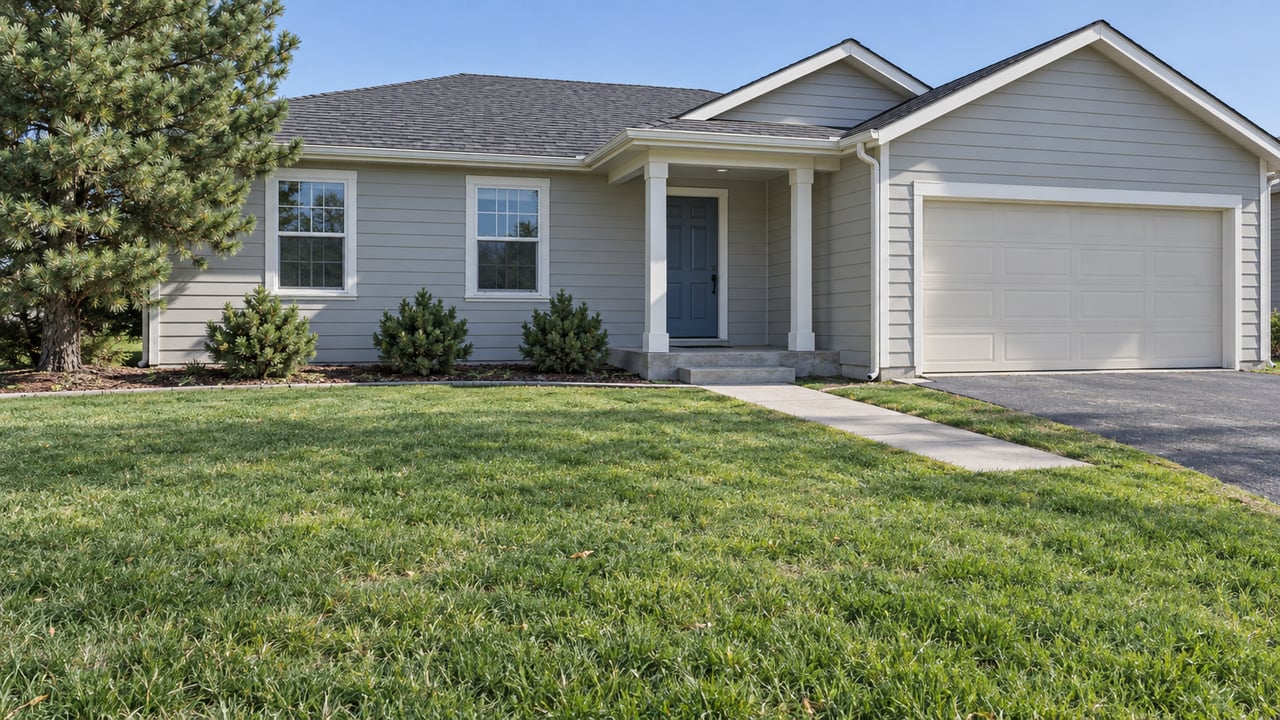
Post Falls has room to keep building. Subdivisions like West Prairie and North Prairie sit on larger lots with space for shops, RVs and boats, the kind of half-acre parcels that real estate professionals in the area describe as popular with buyers who want elbow room without leaving the city limits. Newer master-planned communities, including Teton Meadows and the golf course neighborhood built around Prairie Falls Golf Club, have added inventory built since 2000, much of it since 2010. Montrose offers floor plans from 1,500 up to nearly 4,500 square feet within walking distance of Willamette Park and a trail network that ties into the Centennial Trail. Riverside Harbor gives HOA members access to a private riverfront beach and several neighborhood parks. This is a city still adding subdivisions on Rathdrum Prairie land, and new supply keeps a lid on price even as demand rises.
Coeur d'Alene doesn't have that option. The lake is in town, Sherman Avenue carries the city's restaurant and retail core, and the Coeur d'Alene Resort's dock draws a holiday lights display that pulls traffic from Spokane every December. That geography is also a constraint. There's no equivalent of West Prairie inside Coeur d'Alene's city limits, no undeveloped edge to absorb new subdivisions the way Post Falls can. The housing stock skews older and more built-out, and a meaningful share of it carries a lake-proximity premium that has nothing to do with square footage.
Two Markets, Two Different Kinds of Room to Move
| Post Falls | Coeur d'Alene | |
|---|---|---|
| Median sale price | $525,000 (3 mo. ending May 2026) | $599,000 (3 mo. ending Aug 2026) |
| Days on market | ~14 days | ~26 days |
| Offers per listing | ~2 | ~1 |
| Sale-to-list ratio | ~99% (March 2026) | ~94% (March 2026) |
| Population growth | ~3.6% annualized (2026) | ~1.0% annualized (2026) |
The growth-rate line at the bottom is the part that explains the rest of the table. Post Falls is adding residents faster than Coeur d'Alene, and it's absorbing them into a housing stock that's still expanding. That combination, more buyers chasing more available new construction, is what keeps days on market short and sale-to-list ratios high even at a lower price point. Coeur d'Alene's slower population growth against a fixed, older housing stock produces the opposite pattern: fewer competing buyers per listing, more days for a seller to sit with an offer they don't love, and more willingness to come down from list.
What This Means Once You're Actually Writing an Offer
A buyer who assumes Post Falls will negotiate like a slower market is bringing the wrong playbook. Waiving a home inspection contingency or writing an escalation clause because "it's the cheaper city" is a way to lose ground you didn't need to give up, since the data says Post Falls is the more competitive of the two markets right now, not the more forgiving one. The 14-day median and two-offer average mean a well-priced Post Falls listing, particularly in an established subdivision near Q'emiln Park or Black Bay Park, can move before a buyer has finished comparing it to the next one.
Coeur d'Alene rewards a different kind of patience. A 26-day median and a 94 percent sale-to-list ratio mean a seller who lists in July might still be negotiating in August, and a buyer willing to wait out that window has more legitimate leverage on price, repair credits or closing costs than the sticker price alone would suggest.
None of this means Post Falls is overpriced or Coeur d'Alene is underpriced. It means the two cities are running on different supply dynamics, and a buyer who treats the median price gap as the whole story will misjudge how the negotiation actually plays out. The question worth asking isn't just how much a house costs in each city. It's how many other people are trying to buy the same kind of house at the same time, and how much room the local supply has to answer that demand.
Frequently Asked Questions
Does Post Falls' lower median price mean lower-quality construction? No. The gap is mostly a function of housing stock composition rather than build quality. Post Falls has more recently built subdivision and master-planned inventory, including communities built out since 2010, while Coeur d'Alene's stock skews older and includes a lake-proximity premium tier that pushes its median higher regardless of condition.
If Post Falls homes are selling at 99% of list, is there any negotiating room at all? There's less than in Coeur d'Alene, but it isn't zero. Homes that sit past the 14-day median, or that come with a documented repair need, still see price adjustments. The point is that a buyer shouldn't expect the same flexibility they'd find in a slower market just because the entry price is lower.
Will the price gap between the two cities widen or narrow? That depends largely on how long Post Falls can keep adding new subdivisions before it runs into the same geographic limits Coeur d'Alene already faces. As of 2026, Post Falls is still growing population faster than Coeur d'Alene and still has land available for new construction, both of which have kept its price growth roughly in line with, rather than ahead of, Coeur d'Alene's.
Comparing these two markets on price alone leaves out the half of the picture that actually determines how a transaction goes. If you're weighing Post Falls against Coeur d'Alene and want a read on how a specific listing is likely to negotiate, Natalie Priebe can walk through the comps with you before you write the offer, not after.
This article is general information, not legal, tax or financial advice. Consult a qualified professional about your situation.