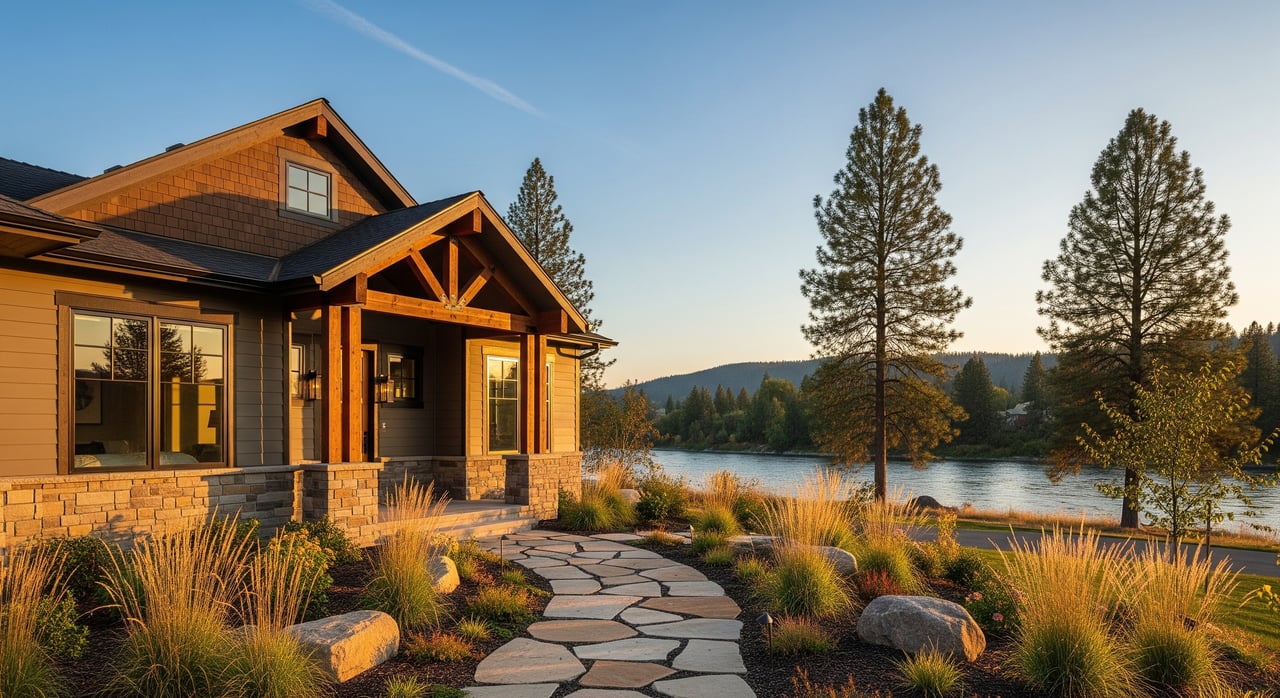
Thinking about buying your first home in Post Falls? You want a clear plan, straight answers on costs, and local tips that actually help. This guide breaks down the process step by step, shows what to budget for, and highlights Post Falls specifics that first-time buyers should know. You’ll finish with a confident roadmap and next steps. Let’s dive in.
Why Post Falls draws first-time buyers
Post Falls sits between Coeur d’Alene and Spokane, so you get easy access to jobs, shopping, and recreation. The area has grown in recent years as more people move to North Idaho for lifestyle and tax advantages. Historically, Post Falls has been relatively more affordable than downtown Coeur d’Alene and a bit higher than some outlying areas like parts of northern Kootenai County. That balance can shift, so it helps to watch current local MLS updates.
Inventory and demand change by season and price range. Entry-level homes often move faster, while higher price points can see longer days on market. When inventory tightens, plan for faster decisions and strong pre-approval. When supply rises, you gain leverage on price and terms.
Step-by-step path to buying
Follow this timeline to stay on track.
1) Prep and education (1–4 weeks)
- Check your credit, fix errors, and build a realistic budget.
- Learn carrying costs like taxes, insurance, HOA dues, and utilities.
- Explore local assistance options through the Idaho Housing and Finance Association.
2) Get pre-approved (1–10 days)
- Contact 2–3 lenders and compare rates, fees, and programs.
- Gather pay stubs, W-2s, bank statements, and ID to speed things up.
- A current, written pre-approval helps you compete and set a clear budget.
3) House hunting (2 weeks to 6+ months)
- Use MLS alerts with a local agent and tour in person.
- Prioritize needs vs. wants: commute, schools, lot, and future plans.
- In Post Falls, consider access to the Spokane River, Highway 41 and US-95, and nearby amenities.
4) Make an offer (1–7 days after finding the home)
- Strategy depends on market conditions. In a hot market, offers may include escalation clauses and shorter timelines. In a balanced market, standard contingencies are common.
- Typical contingencies: inspection, appraisal, and financing. Keep protections while staying competitive.
5) Under contract to close (21–45+ days)
- Inspection within 3–10 days of acceptance. Budget about $300–$700.
- Appraisal often takes 1–2 weeks and affects loan approval and final price if it comes in low.
- Underwriting and final approval take 1–3+ weeks. Respond to lender requests quickly.
6) Closing day (on or around day 30–45)
- Do a final walk-through 24–48 hours before closing.
- Sign at a title or escrow office and pay closing costs.
- Keys transfer at or after funding and recording.
What to budget for
Setting the right savings target is key for a low-stress purchase.
Down payment
- Conventional loans: often 3–20%. Many first-time buyers put 3–5% with PMI.
- FHA: as low as 3.5%, with mortgage insurance.
- VA/USDA: 0% down for eligible buyers and qualifying areas.
- Local help: Programs may be available through the Idaho Housing and Finance Association. Terms change, so check current options.
Closing costs (one-time)
- Plan for about 2%–5% of the purchase price.
- Common items: loan fees, appraisal ($450–$800), inspection ($300–$700), title and escrow, recording fees, and prepaid taxes and insurance.
- Idaho generally has no statewide real estate transfer tax.
- For a plain-English overview, see the CFPB guide to closing costs.
Ongoing costs
- Property taxes: Idaho’s effective rate is relatively low compared to national averages, but local levies vary by property. Review tax estimates with the Kootenai County Assessor.
- Homeowner’s insurance: get quotes early, especially for older homes or special features.
- PMI: applies to most conventional loans with less than 20% down.
- HOA dues: if applicable, review budgets and rules before you commit.
- Maintenance: set aside 1%–3% of home value per year as a rule of thumb.
Cash reserves
- Some loan programs require reserves. A safe target is 2–6 months of living expenses on top of your down payment and closing funds.
How market conditions shape your offer
Offer strategy depends on inventory and demand.
When sellers have the advantage
- Expect multiple offers and shorter timelines.
- Lead with a solid pre-approval, reasonable earnest money, and a clean but protective offer.
- Consider an escalation clause with a clear cap. Only use appraisal gap coverage if your lender and budget support it.
When buyers have the advantage
- You can keep full contingencies and request repairs or credits.
- Seller-paid closing costs can be possible.
- Prices may be closer to list or sometimes below, depending on days on market.
Local checks that protect you
A few local items deserve early attention.
- Floodplain: Parts of Post Falls sit near the Spokane River. Check the FEMA Flood Map Service Center for flood status and insurance needs.
- Septic and wells: If you are looking at rural properties, confirm system type, inspection history, and county health records.
- Permits and zoning: Verify additions, accessory structures, and prior work through City of Post Falls Planning & Building.
- HOA documents: Read bylaws, budgets, and reserve studies early if the home is in an HOA.
- Seller disclosure: Idaho requires a property condition disclosure. Review it closely and use your inspection to verify.
Programs that can help first-time buyers
- Idaho Housing and Finance Association: Explore mortgages and possible down payment assistance at the IHFA website.
- FHA, VA, and USDA loans: Offer lower down payments for eligible buyers and properties. Your lender can confirm eligibility and terms.
- Homebuyer education: Ask about classes or counseling that may reduce costs or qualify you for assistance.
Timing your search in North Idaho
Spring and summer tend to bring more listings and more competition. Fall and winter can be calmer with fewer buyers and motivated sellers, but also fewer choices. If you are flexible, you can use seasonality to your advantage by adjusting your pace and offer strategy.
Work with a local advocate
Buying your first home is a big step, and the right partner makes it simpler. A local agent helps you read neighborhood-level trends, set smart contingency timelines, and negotiate with confidence. If you are ready to get started or want a quick budget and strategy session, connect with Natalie Priebe for a personalized consultation.
FAQs
What are typical closing costs for first-time buyers in Post Falls?
- Plan for about 2%–5% of the purchase price, including lender fees, appraisal, inspection, title and escrow, recording, and prepaid taxes and insurance.
How much down payment do I need for a home in Post Falls?
- Many first-time buyers use 3%–5% down with PMI on conventional loans, 3.5% on FHA, and 0% on VA or USDA if eligible.
How long does it take to buy a home in Post Falls?
- From offer to close usually takes 30–45 days with financing, plus your home search time, which can range from a few weeks to several months.
Are there first-time buyer programs in Idaho?
- Yes. Start with the Idaho Housing and Finance Association for mortgage options and possible down payment assistance.
Do I need flood insurance for a home in Post Falls?
- It depends on the property’s location. Check the FEMA Flood Map Service Center and confirm requirements with your lender and insurer.
How can I estimate property taxes in Kootenai County?
- Review parcel data and mill levies with the Kootenai County Assessor and request an estimate for the specific property.
Where can I learn more about closing costs and the loan process?
- The CFPB’s closing cost guide offers clear explanations and tips for comparing loan estimates.